
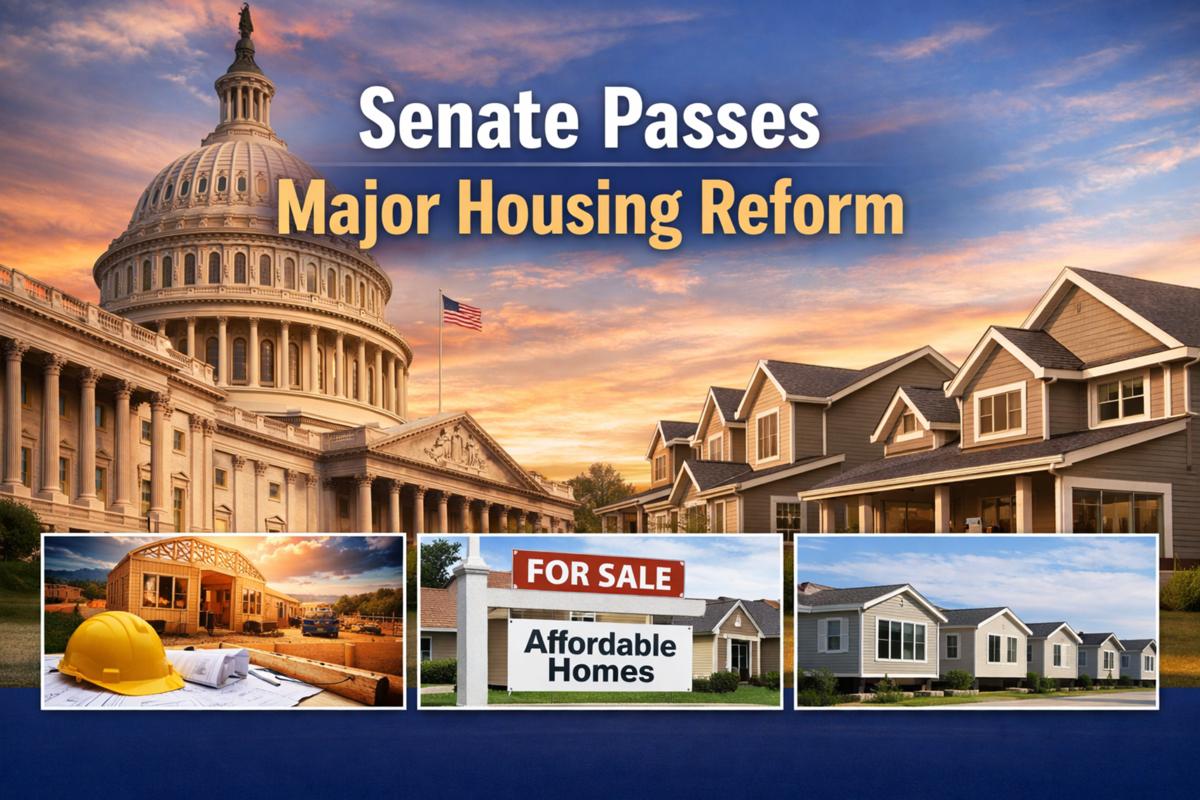
The U.S. Senate has approved sweeping housing legislation designed to address the country’s ongoing housing shortage and improve access to homeownership. The bipartisan bill passed with strong support from lawmakers in both parties and includes a wide range of policies aimed at increasing housing supply, reducing regulatory barriers, and adjusting the role of large institutional investors in the housing market.
Housing affordability has become a major challenge across the United States as home prices have risen faster than incomes in many areas. One major factor behind the increase is a shortage of available homes. According to the housing market data from realtor.com, estimates suggest the country may be short roughly four million housing unit.
Addressing Supply and Investor Activity
One of the most notable provisions in the bill focuses on large institutional investors in the single-family housing market. The legislation would limit companies that own at least 350 homes from purchasing additional single-family properties, though several exceptions are included.
For example, investors would still be allowed to buy homes that require significant renovation in order to bring them up to code. The bill also allows investment in newly built rental homes, commonly known as build-to-rent communities. However, those homes would eventually need to be offered for sale after several years, with tenants receiving priority to purchase them.
Supporters of the measure argue that limiting large-scale acquisitions could help create more opportunities for individual buyers entering the market.
Manufactured Housing Could Expand
Another section of the legislation targets the production of factory-built housing, often referred to as manufactured housing. Lawmakers are proposing changes that could reduce construction costs and allow more flexibility in design.
Manufactured homes are typically faster and less expensive to build than traditional site-built homes. Policy analysts say they could help fill the gap left by the decline of traditional starter homes, which are less commonly built today.
Lower production costs and fewer zoning restrictions could encourage more development of these types of homes in communities facing housing shortages.
Encouraging Investment in Affordable Housing
The bill also proposes changes to financing rules that could increase private investment in affordable housing developments. Specifically, it would raise limits on how much capital banks can allocate toward affordable housing projects.
Industry groups say the change could unlock billions of dollars in additional funding for housing construction, particularly projects tied to the Low-Income Housing Tax Credit program.
By expanding available financing, policymakers hope to support new developments that include affordable units for lower-income households.
Streamlining the Building Process
Beyond financing and investor restrictions, the legislation includes measures intended to speed up the homebuilding process. Some provisions would simplify environmental reviews for certain projects and provide grants to help communities develop preapproved housing designs.
These “pattern books” could make it easier for builders to move projects forward by reducing the number of approvals required during development.
While some critics argue that federal housing programs have historically done little to solve supply shortages, supporters believe a combination of regulatory changes, incentives, and investment tools could help accelerate new construction.