Factory-Built Homes Are Gaining Attention in California’s Housing Crisis
-
 by Biazowa
- April 8, 2026
- Market Trends
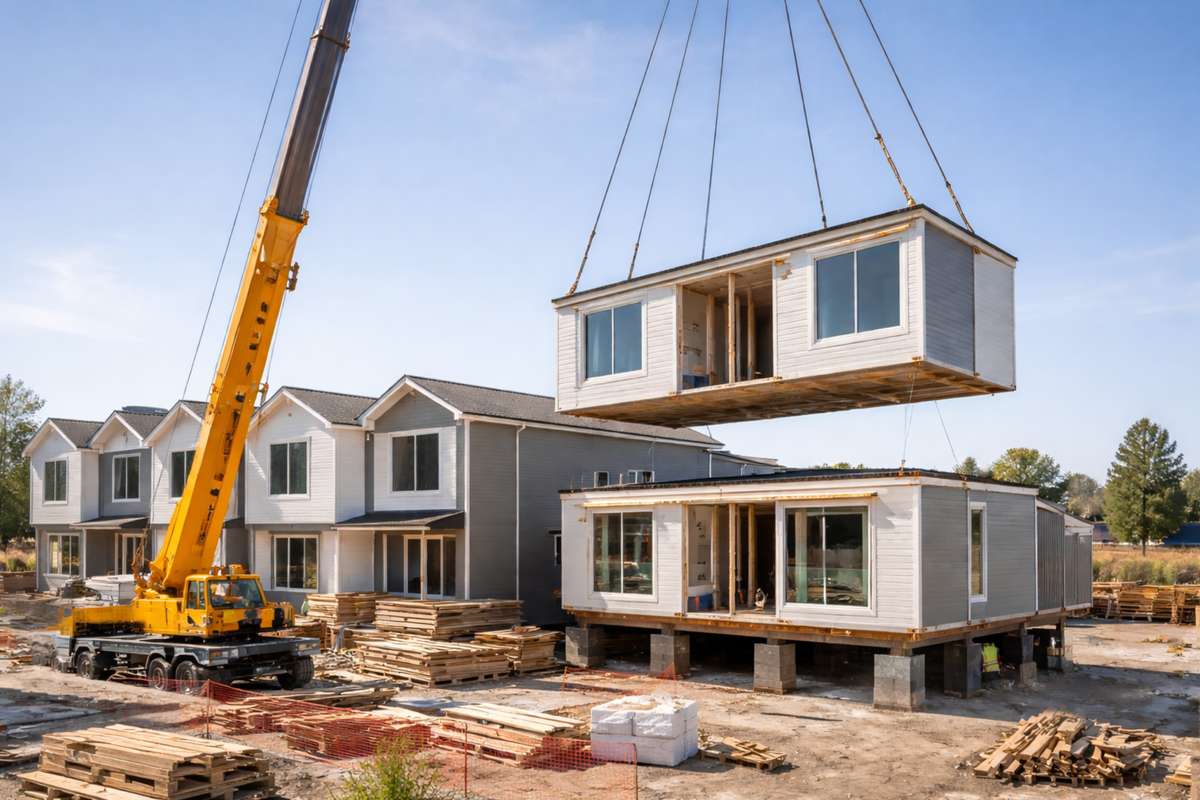
California’s housing shortage has reached a point where traditional building methods alone may not be enough to keep up with demand. As the gap between available homes and the number of people who need them continues to widen, lawmakers and developers are exploring faster and more cost-effective ways to build.
One solution gaining momentum is factory-built housing also known as modular construction which could play a growing role in how homes are delivered across the state.
A Supply Problem That Needs New Solutions
California has long struggled with housing affordability, particularly for lower-income residents. The shortage of available homes has contributed to rising rents, displacement, and increased competition for limited housing options.
Even with recent policy efforts aimed at speeding up development, building costs remain high and timelines can stretch for years. This has created a need for alternative approaches that can deliver housing more efficiently without compromising quality.
What Is Factory-Built Housing?
Factory-built housing involves constructing parts of a home in a controlled manufacturing environment and then transporting those components to the building site for assembly.
Unlike traditional construction, where everything is built on-site, this method allows multiple parts of the building process to happen simultaneously. As a result, projects can often be completed faster and with fewer delays caused by weather, labor shortages, or logistical challenges.
Why It’s Getting More Attention
The growing interest in modular construction is largely driven by its potential to reduce both time and cost, two of the biggest barriers to new housing development.
By streamlining the construction process, developers may be able to deliver more housing units within shorter timeframes. This is especially important in areas where demand continues to outpace supply and where affordability remains a major concern.
In addition, building components in a factory setting can create more consistency and efficiency, which may help control costs over time.
Policy Efforts to Support Faster Building
Lawmakers are increasingly looking at ways to support this type of construction. Recent proposals aim to reduce regulatory hurdles, simplify approval processes, and make it easier to transport and assemble factory-built housing components.
The broader goal is to create an environment where innovative construction methods can scale more easily, helping to address the housing shortage more effectively.
At the same time, there is recognition that solving the housing crisis requires a combination of strategies including protecting existing tenants while also expanding the overall housing supply.
What Developers Are Seeing on the Ground
Developers working on affordable housing projects are already beginning to explore modular construction as a practical solution. In some cases, upcoming developments are being designed with factory-built components to reduce build time and improve efficiency.
The expectation is that if projects can be completed faster and at a lower cost, more housing can be delivered using the same resources. This could make a meaningful difference in addressing shortages, particularly for lower-income communities.
What This Means for the Housing Market
Factory-built housing is not a complete solution on its own, but it represents an important shift in how the industry is thinking about construction.
For buyers and renters, the long-term impact could be increased housing availability and potentially more stable pricing if supply improves. For developers and policymakers, it offers a way to rethink traditional processes that have struggled to keep pace with demand.
Looking Ahead
As California continues to search for solutions to its housing challenges, innovation in construction is likely to play a larger role. Factory-built housing is one of several approaches being considered, but its ability to deliver homes more quickly and efficiently makes it a notable part of the conversation.
In the years ahead, how widely these methods are adopted and how effectively policies support them could influence the pace at which new housing becomes available across the state.